


Why GLP-1 Success Coaching Matters: Medication Is Only Part of the Journey
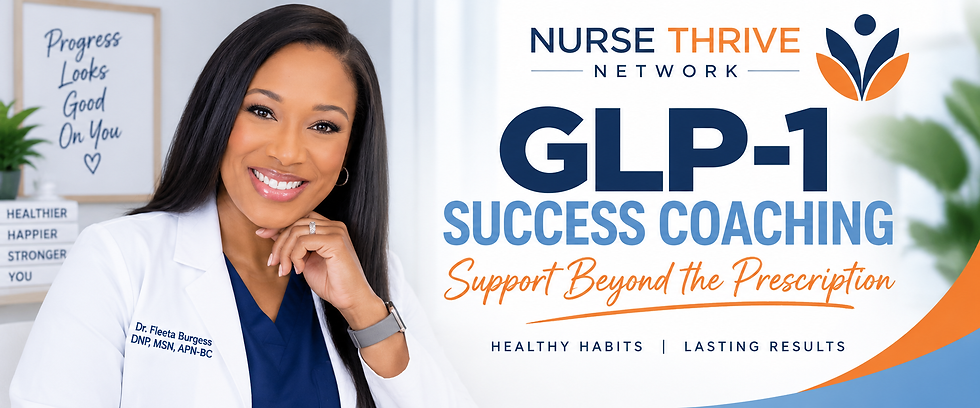
GLP-1 medications have changed the landscape of obesity treatment. Medications such as semaglutide and tirzepatide can help reduce appetite, improve satiety, and produce significant weight loss for many people. But successful weight management involves more than taking a medication.
The clinical trials that established the effectiveness of these medications did not simply hand participants a prescription and send them on their way. Lifestyle and behavioral support were incorporated into major studies of GLP-1–based obesity treatment. In the landmark STEP 1 trial, for example, adults receiving semaglutide 2.4 mg also participated in lifestyle intervention. New England Journal of Medicine
That is one reason I believe there is an important role for GLP-1 Success Coaching: helping people build the habits that support their health while they are on their GLP-1 journey.
The Medication Can Help But Habits Still Matter
GLP-1 medications can make it easier for some people to eat less by decreasing appetite and increasing feelings of fullness. However, eating less does not automatically mean eating well.
Someone may consume fewer calories while still falling short on protein, fiber, fluids, vitamins, minerals, or other nutritional needs.
A 2025 joint advisory from the American College of Lifestyle Medicine, American Society for Nutrition, Obesity Medicine Association, and The Obesity Society emphasized the importance of nutrition and lifestyle interventions alongside GLP-1 therapy. The advisory specifically addresses nutritional adequacy, muscle preservation, physical activity and behavioral strategies during treatment. PubMed Central (PMC)
This is where structured support can be valuable.
Instead of focusing exclusively on “How little can I eat?”, coaching can help shift the conversation toward:
“How can I nourish my body while building habits I can actually maintain?”
Protecting Muscle Matters During Weight Loss
The number on the scale isn't the only outcome that matters.
Weight reduction can include loss of both fat and lean tissue. Current obesity-care standards therefore emphasize adequate protein intake and muscle-strengthening activity during treatment with obesity medications. DOI
This is particularly important because maintaining muscle supports strength, physical function and long-term health.
A GLP-1 Success Coaching program can help someone translate those broad recommendations into everyday behaviors: planning protein-containing meals, establishing realistic movement goals, incorporating resistance exercise when appropriate, and tracking progress beyond the scale.
Lifestyle Support Is Part of Modern Obesity Care
The idea of pairing medication with behavioral support isn't simply a wellness trend.
The World Health Organization's guidance describes obesity as a chronic disease requiring long-term care and states that people prescribed GLP-1 or GLP-1/GIP therapies should receive counseling on healthy dietary practices, physical activity and other behavioral and lifestyle changes. DOI
The American Diabetes Association's obesity standards likewise recognize nutrition, physical activity and behavioral therapy as important components of weight management. PubMed Central (PMC)
Research with tirzepatide provides another useful example. In SURMOUNT-3, participants first completed a 12-week intensive lifestyle intervention before eligible participants were randomized to tirzepatide or placebo. Those who proceeded to randomization had already lost an average of 6.9% of their body weight during that lifestyle-intervention period. PubMed
Medication and lifestyle intervention aren't competing approaches. They can be complementary components of comprehensive obesity care.
What Happens When the Scale Stops Moving?
A common experience during a weight-loss journey is:
“I'm taking my medication. I'm eating less. Why am I not losing anymore?”
The answer isn't always to eat even less.
Body weight can be affected by numerous factors, and an apparent plateau deserves a broader look at eating patterns, physical activity, hydration, sleep, constipation and other factors. Medication effectiveness and medical causes should be evaluated by the individual's treating clinician.
Coaching provides a different kind of support: helping someone examine their behaviors and routines, identify realistic areas for improvement, establish goals and maintain accountability.
Building Habits for the Long Term
Perhaps the most important question isn't simply:
“How much weight can I lose?”
It's:
“What am I learning and building along the way?”
Long-term weight management can be challenging. In an extension of the STEP 1 trial, participants who stopped semaglutide and the study's lifestyle intervention regained approximately two-thirds of their prior weight loss during the following year. The researchers said the findings reinforce the chronic nature of obesity and the importance of ongoing management. PubMed Central (PMC)
That finding should not be interpreted to mean that coaching alone prevents weight regain after stopping a GLP-1. The evidence doesn't establish that. Rather, it highlights why obesity should be approached as a chronic condition rather than a short-term diet.
What Is GLP-1 Success Coaching?
My GLP-1 Success Coaching through Nurse Thrive Network is designed to provide additional lifestyle and behavioral support for people navigating their GLP-1 journey.
Coaching can focus on areas such as nutrition habits, protein and fiber, hydration, movement and strength-building habits, accountability, goal setting, progress beyond the scale, and developing sustainable routines.
Coaching does not replace medical care. It does not include diagnosing medical conditions, prescribing medication, changing GLP-1 doses, or managing another clinician's treatment plan. Those decisions belong between you and your prescribing healthcare professional.
Think of it this way:
Medication can be one tool. Coaching helps you work on the habits surrounding the tool.
The goal isn't perfection. It's to use this period to build behaviors that support your health today and in the years ahead.
Ready for additional support on your GLP-1 journey?
GLP-1 Success Coaching 60-minute one-on-one session | $125Nurse Thrive NetworkBook your session today.
References
Wilding JP, et al. Once-Weekly Semaglutide in Adults with Overweight or Obesity. New England Journal of Medicine. 2021. New England Journal of Medicine
Wadden TA, et al. Tirzepatide after intensive lifestyle intervention in adults with overweight or obesity: the SURMOUNT-3 phase 3 trial. Nature Medicine. 2023. DOI
Mozaffarian D, et al. Nutritional priorities to support GLP-1 therapy for obesity: A joint advisory. Obesity. 2025. PubMed
Pharmacologic Treatment of Obesity in Adults: Standards of Care in Overweight and Obesity. American Diabetes Association. DOI
World Health Organization Guideline on the Use and Indications of GLP-1 Therapies for the Treatment of Obesity in Adults. DOI
Wilding JPH, et al. Weight regain and cardiometabolic effects after withdrawal of semaglutide: The STEP 1 trial extension. Diabetes, Obesity and Metabolism. 2022.


Comments